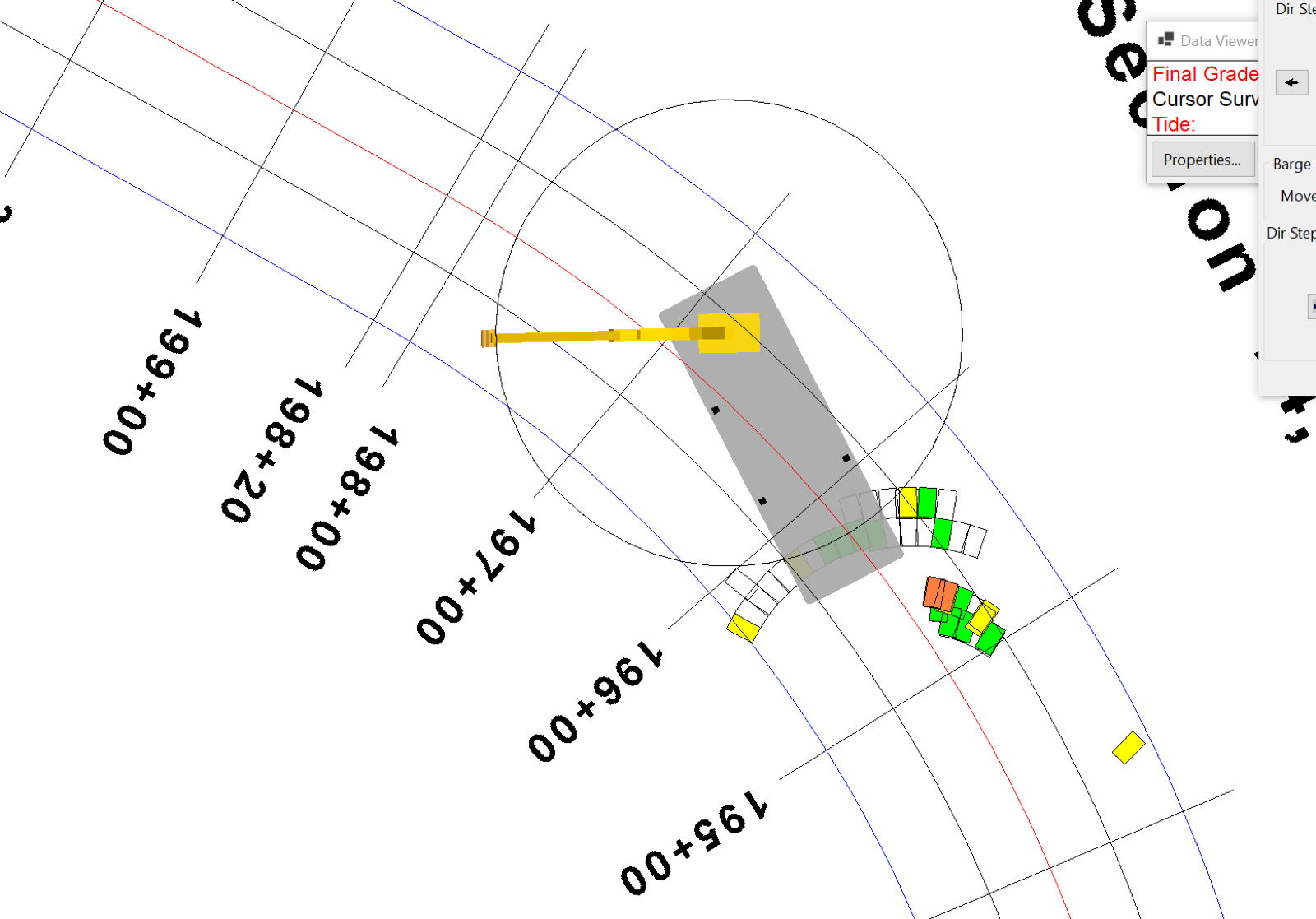
ClamVision was built from the ground up for clamshell and crane-operated dredging. Every aspect of the software — sensor integration, bite logging, visualization, and reporting — reflects the specific workflow of clamshell dredging operations.
How ClamVision guides a clamshell dredge
The operator opens ClamVision at the start of the shift and sees the project area overlaid with the design surface. As the crane swings to each position, the live barge and boom model follows. When the bucket is lowered, the depth readout shows real-time position relative to the design grade. When the bucket closes and lifts, ClamVision automatically records the bite:
- Bucket tip position (X, Y, Z) at time of closure
- Depth achieved versus design depth
- Tide level at time of bite
- GPS quality indicators (fix type, satellite count, HDOP)
- Pressure readings if a sensor is connected
- Rotation angle of the crane
After the shift, the bite heatmap shows exactly where the crew dug, how deep they went, and where the remaining material is.
Bite logging database
Every bite is written to a SQLite database with full sensor metadata. The database can be queried directly, exported to CSV or DXF, or used to drive the built-in bite reports. Thousands of bites per project are handled without performance degradation.
Grade compliance and under-dredge detection
ClamVision flags bites that did not reach design grade and highlights those areas in the plan view with a distinct color. Operators can see at a glance where they need to return for a follow-up pass, and project managers can pull a grade compliance report showing the percentage of the survey area that meets depth tolerance.